Ceramics to restore: alterations and accidents
Damage is classified by origin. Recognising what affects your piece helps to choose the treatment.
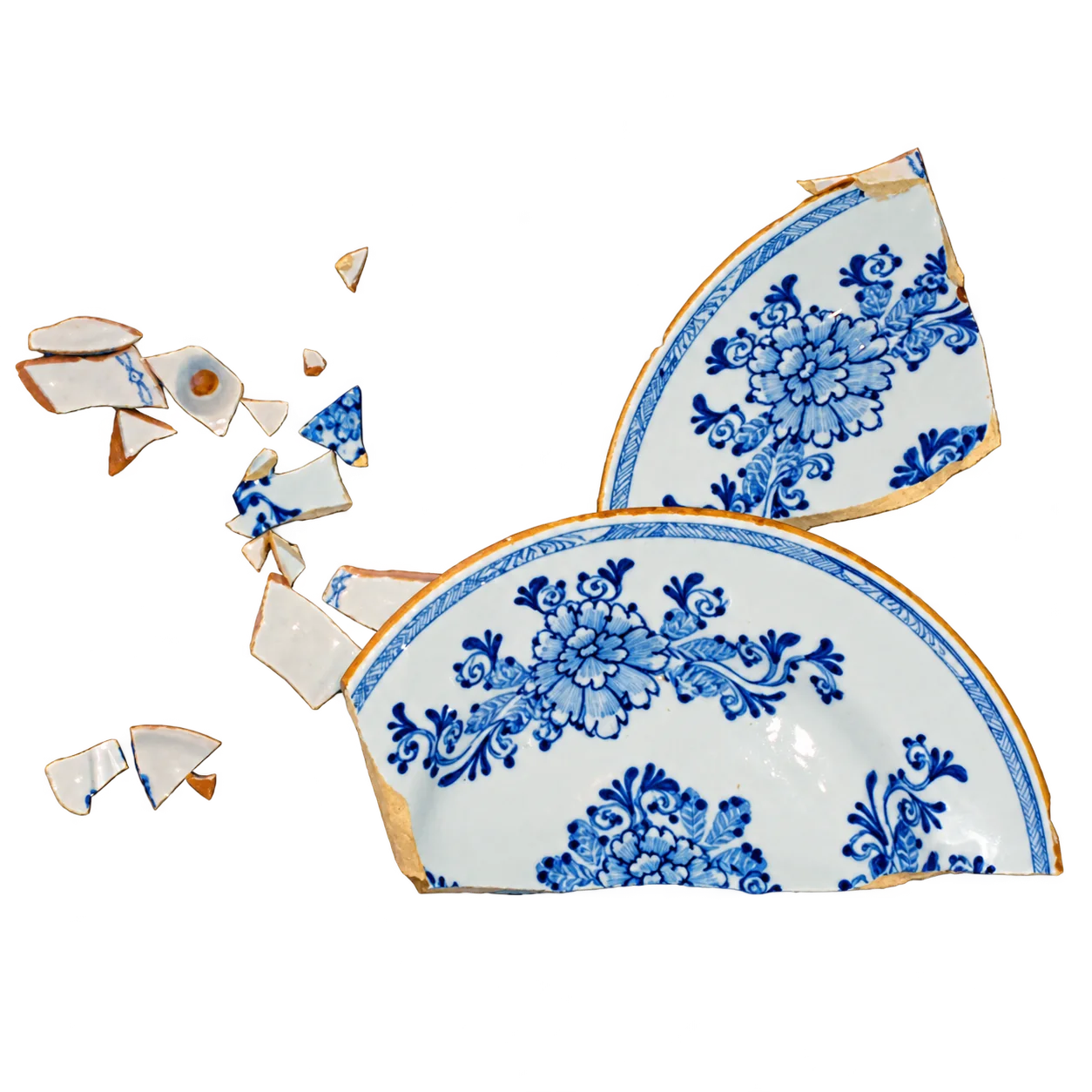
Enamel pull-away, crazing, flaking
Original defects
Some defects come from the making of the piece: glaze that pulls away, crazes in a network of fine lines or flakes off.
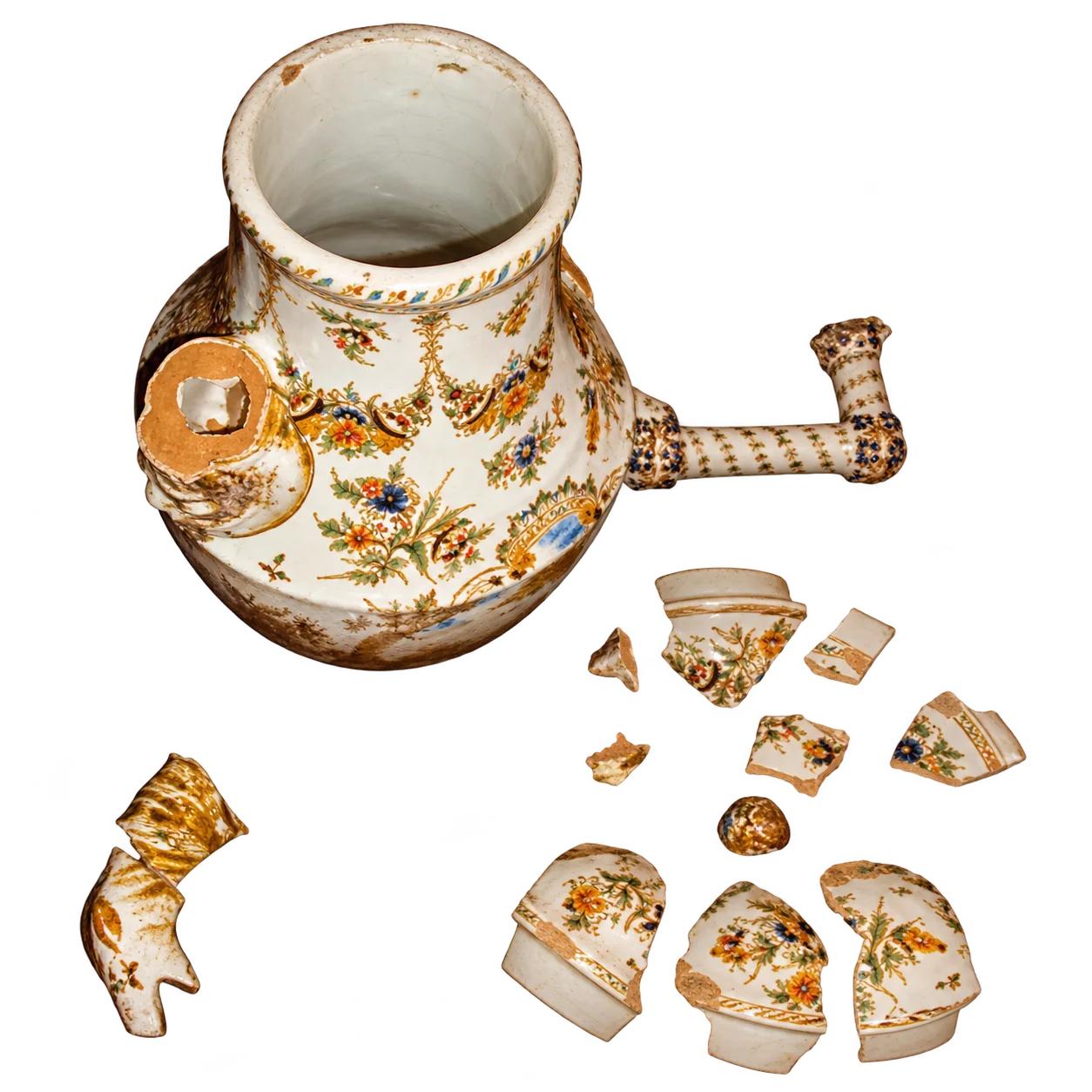
Staples, loss of decor, gilding wear
Damage and wear
Old repair staples, decor that fades away or worn gilding alter the appearance of the piece.
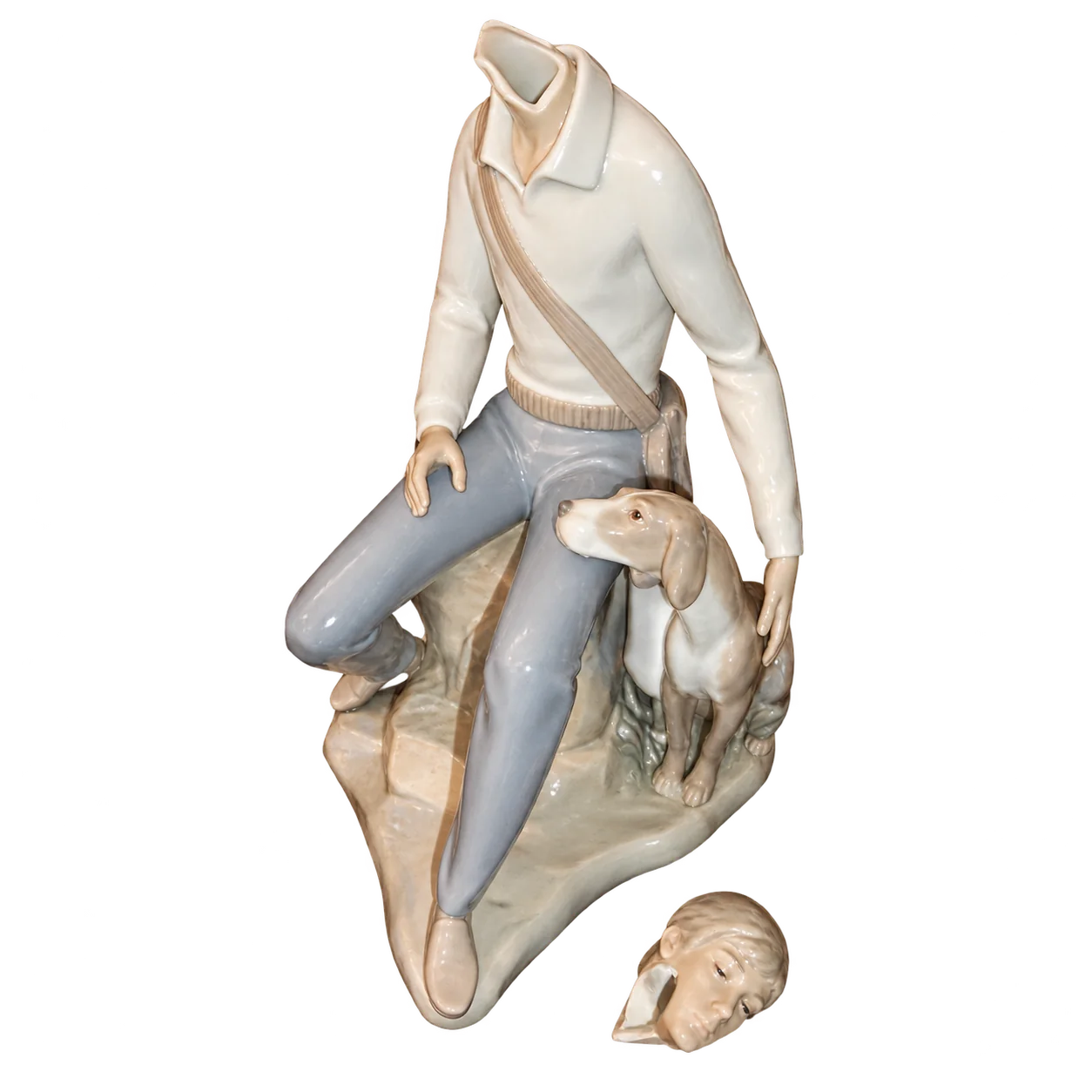
Hairline crack, break, missing material
Cracks, breaks and missing parts
A hairline crack is a fine fissure; a break separates the piece into fragments; a missing part is a lost area that has to be rebuilt. The treatment depends on the condition of the piece and the level of restoration chosen.
Earlier restorations
A piece that has already been repaired can be redone. Old staples, glues and varnishes may be removed, notably when they rust or turn yellow: this is the first step, de-restoration.
The levels of intervention are explained on the ethics page. For an opinion on your piece, send a photo: see quote and timing.
A piece to restore?
Send us a photo for a preliminary estimate.